


Md Asiuzzaman | Career Educator & International Students Advisor
As technology evolves, robots take over manufacturing, and AI simplifies code writing. Automation is changing workplaces worldwide, but some skills remain uniquely human. In this era of AI, these human abilities will be crucial for career success.
Why Soft Skills Are More Crucial Than Ever
The World Economic Forum predicts that AI will eliminate 85 million jobs by 2030. However, about 97 million new roles will be created. Thriving in this shifting landscape depends on your human skills.
Relying only on technical knowledge won’t ensure your career lasts. Machines can process data and learn faster than people, but they can’t build real connections. They struggle with understanding context and lack genuine empathy.
A report from LinkedIn’s 2024 Workplace Learning shows that 92% of hiring professionals think soft skills are as necessary, if not more important, than hard skills. Companies are investing billions in soft skills training, with the market for these programs projected to reach $38 billion by 2024.
Top 5 AI-Resistant Skills

1. Critical Thinking & Problem-Solving
This skill involves analyzing complicated situations, questioning assumptions, and making informed decisions in unclear situations. While AI excels at recognizing patterns, it often struggles with new challenges. Critical thinking involves examining context and balancing conflicting interests, prompting people to ask, “What if?”
2. Emotional Intelligence (EQ)
Emotional intelligence sets good employees apart from great leaders. It’s about interpreting social cues, understanding unspoken needs, and managing your own emotions in challenging situations. While AI can analyze facial expressions and voice tones, it lacks true feelings.
3. Adaptive Communication
This skill means adjusting your messages based on your audience, reading body language, and effectively handling challenging conversations. AI can share information, but it often misses the subtleties of human interaction.
4. Creativity & Innovation
Coming up with original ideas, connecting unrelated concepts, and thinking outside the box are crucial traits for the future work environment. While AI can help with creative tasks, genuine innovation comes from human inspiration.
5. Leadership & Influence
Inspiring teams, building a culture of trust, managing workplace dynamics, and creating change define effective leadership. AI cannot mimic the human ability to motivate and influence.
As we progress in a more automated world, developing these human skills will be vital for career resilience and success. Strengthening emotional intelligence, critical thinking, and creativity will make you stand out in the changing job market. If you embrace these abilities, you’ll become an invaluable asset in the age of AI.
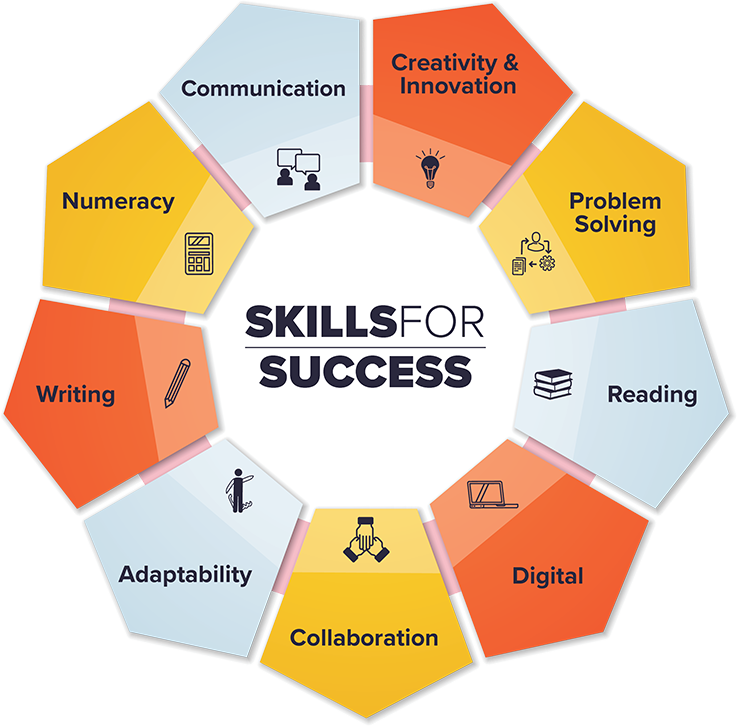
Skills for Success, Canada (Source: www.canada.ca)
In today’s competitive job market, emotional intelligence (EQ) is key to job performance. Managers with high emotional intelligence can notice subtle changes in team morale. They can adjust their management style to offer support and prevent burnout before it happens.
A 2024 McKinsey study found that 58% of executives see critical thinking as the most essential skill for future leaders. For example, while AI can identify patterns in X-rays better than a radiologist, it can’t consider a patient’s personal history or cultural background. It struggles with ethical issues, highlighting how valuable human judgment is.
Unlike AI chatbots that lack genuine empathy, emotionally intelligent leaders are vital for providing outstanding customer service and building loyalty. Creating a sense of psychological safety within teams relies on real human connections—something no algorithm can replace.
The Art of Adaptive Communication
Communication involves more than just sharing information; it’s about building connections, persuading others, and showing understanding. While AI can create grammatically correct text, it doesn’t interpret body language or adjust tone based on social cues in the moment.
Effective communicators know how to customize their messages. They can sense confusion and adapt their approach as needed. The National Association of Colleges and Employers indicates that communication skills are a top priority for 86% of employers when hiring.
Consider the challenges of difficult conversations—delivering disappointing news, resolving conflicts, or motivating a reluctant team. These situations require a nuanced understanding of emotions and human judgment. While AI can draft an email, it’s the human touch that makes a message impactful.
Creativity and Innovation: The Human Edge
Creativity is another area where humans thrive. AI typically creates things by combining existing patterns, while true innovation happens when people break conventions and connect seemingly unrelated ideas. Creative breakthroughs require courage, and the World Economic Forum ranks creativity as the third most crucial skill for 2025, up from tenth in 2020.
AI can produce art based on its training, generating variations, but it cannot experience those enlightening moments that drive real creativity. Human-led creative problem-solving transforms businesses, launches startups, and disrupts entire industries.
Machines may refine processes, but it is humans who ignite innovation.
Leadership: Beyond Management
Effective leadership goes beyond managing tasks; it’s about inspiring others, sharing a vision, and building trust. While AI can handle scheduling, it can’t make people feel motivated to care and commit.
Great leaders give meaning to their teams, aligning individual efforts with a broader organizational purpose. They navigate the complexities of workplace culture and build strong teams. In fact, in 2024, companies invested $366 billion globally in leadership development, according to Training Industry research.
Authenticity is the heart of effective leadership. People are drawn to leaders they trust, and that trust develops through vulnerability, shared values, and real human connections. Algorithms can’t foster that trust.
Influence is built on relationships, developed over time, and relies on a deep understanding of human motivations. These are skills rooted in humanity—skills that AI cannot replicate.
(Asiuzzaman is a professor of career development and an international student advisor based in Toronto, Canada. Multiple AI tools are used in research, analysis and writing this article.)