

Md Asiuzzaman
Teaching Multiculturalism: The Canadian Diversity Project this past Winter 2026 term, I was always looking for moments that make history feel alive. Diljit Dosanjh gave me one. When news broke that he had gotten emotional during his Vancouver concert, I immediately understood why, along with many of my students from India, as we discussed the 1914 incident in class. But countless newcomers and people abroad may not as they know Canada as a multicultural mosaic.
On April 23, 2026, Indian superstar Diljit Dosanjh launched his Aura World Tour at Vancouver’s BC Place Stadium. The sold-out show drew 55,000 fans to the stadium. But for Dosanjh, this was far more than a concert.
Before taking the stage, he posted a pointed reminder on social media. He highlighted BC Place’s proximity to where the Komagata Maru anchored in 1914, carrying 376 mostly Sikh migrants from Punjab who were denied entry to Canada. His message was both defiant and poignant.
“In 1914, when our people came to Canada for the first time, they didn’t allow us in. That stadium is just two kilometres away from that port. That’s a big thing for us — 55,000 people in the stadium. They didn’t allow us to come, but now we’re here.” — Diljit Dosanjh (Tonight Show, April 27, 2026)
It was a powerful statement. It was also a history lesson for millions watching worldwide.
What Was the Komagata Maru Incident?
Many people outside Canada — and even within it — are unfamiliar with this chapter of history. It deserves to be widely known.
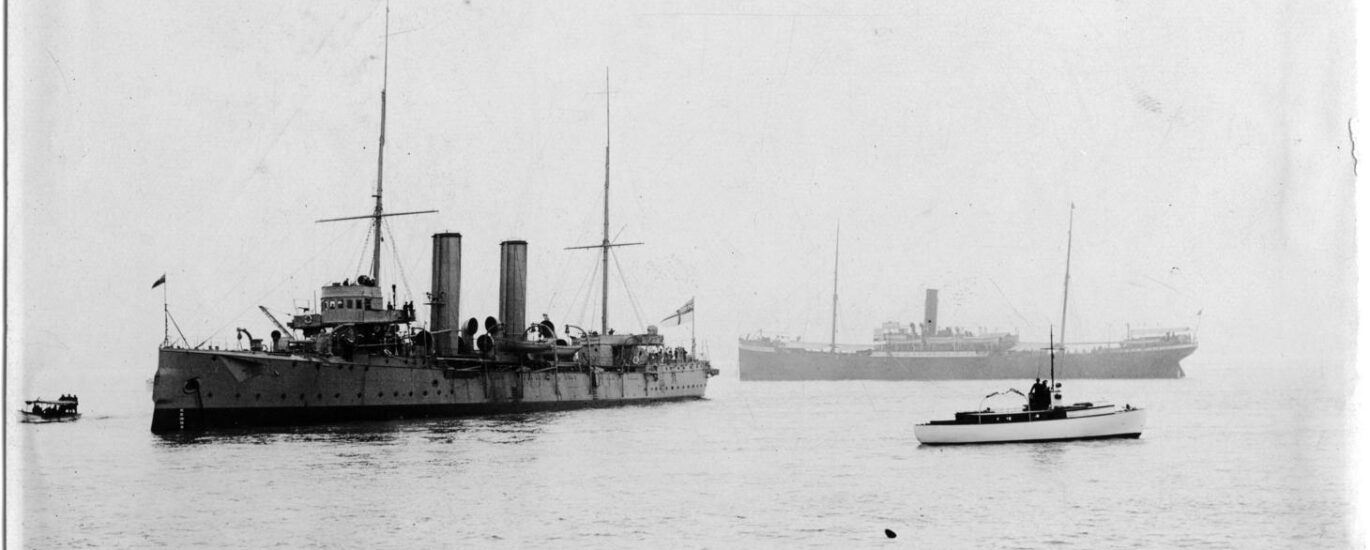
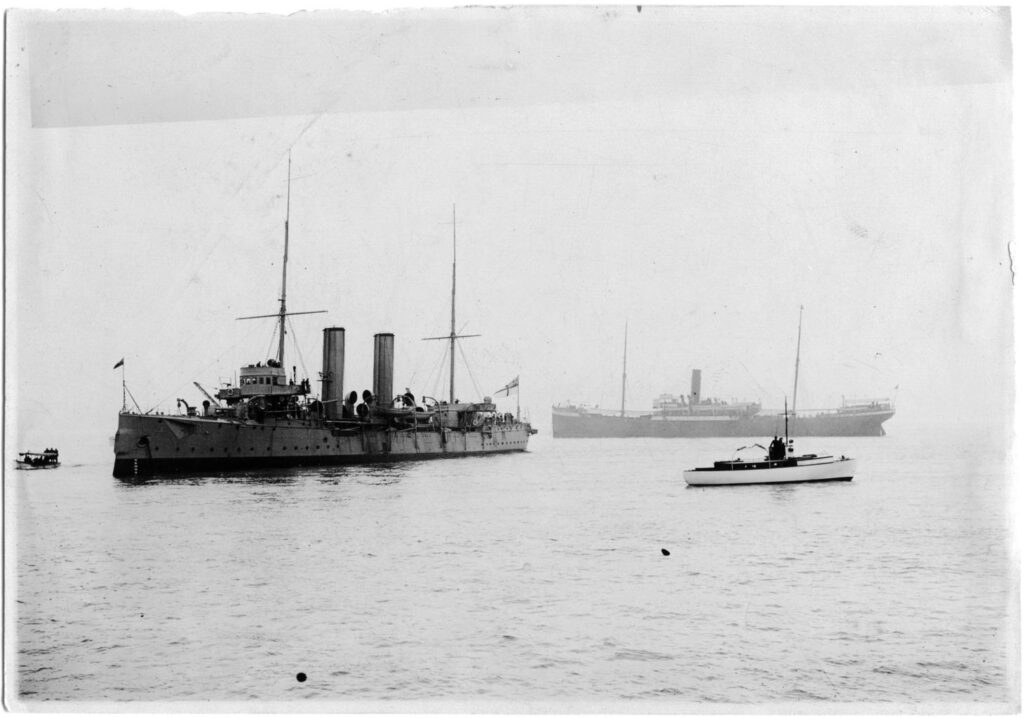
On May 23, 1914, the Komagata Maru reached Vancouver’s harbour via Hong Kong and Japan, carrying 376 prospective South Asian immigrants who hoped to settle in Canada. They were British subjects. They believed that gave them rights.
They were wrong.
Their arrival provoked widespread public opposition. Prevalent ideas of race and exclusion held by most of the local population led to an outpouring of racial rhetoric and considerable effort to force the ship’s return to India.
How did Canada legally justify turning away British subjects? Through calculated, racially targeted legislation.
A 1908 order-in-council required “Asiatic” immigrants to possess at least $200 to enter the country. A second order-in-council required all immigrants to arrive via continuous journey, directly from their country of origin. This was deliberately aimed at South Asians, as nonstop flights from India to Canada were largely unavailable.
The man who challenged these laws was a Sikh businessman named Gurdit Singh. He chartered the Komagata Maru from Hong Kong to confront these restrictions, hoping that he and his passengers — all British citizens — would be able to enter Canada.
The struggle that followed was desperate. Immigration officials did not allow the ship to dock. The passengers were isolated on board, unable to communicate with the South Asian community on shore. In the weeks that followed, conditions, including access to food and water, grew dire.
The local South Asian community rallied. They formed a committee, raised substantial funds, and hired a lawyer to challenge the restrictive immigration laws. A test case was put before the courts but lost in its final appeal.
The Canadian government then sent in a warship. The passengers stood their ground, singing patriotic songs and reading from Sikh scripture. Finally, the government provided food and water for the ship. On 23 July 1914, the Komagata Maru left Vancouver harbour and returned to India with many of its passengers aboard.
For the full account, see the official Parks Canada backgrounder: The Komagata Maru Incident of 1914.
A Pattern of Racist Immigration Policy
The Komagata Maru was not an isolated incident. It was part of a broader, deliberate policy of racial exclusion.
Legislative restrictions on immigration, such as the Continuous Journey Regulation and the Chinese Immigration Act, had explicitly favoured British, American and European immigrants. Non-white people were systematically kept out.
Chinese immigrants faced some of the harshest treatment. The Chinese Head Tax, imposed from 1885, charged Chinese men a significant fee simply to enter Canada. Prime Minister Stephen Harper issued official apologies for the Chinese head tax in 2006 and to residential school survivors in 2008.
The Canadian government also apologized to Chinese Canadians for the Head Tax, to Japanese Canadians for internment during World War II, and to First Nations communities for the violence of residential schools.
For the Komagata Maru specifically, the road to a formal apology was long and contested. Harper offered an informal apology at a Surrey community event in 2008. The Sikh community rejected it, insisting it be delivered on the floor of the House of Commons.
Justice finally came in 2016. Prime Minister Justin Trudeau delivered a formal apology in the House of Commons, emphasizing that Canada’s rich diversity is a source of strength for the country.
“The Komagata Maru incident is a stain on Canada’s past. But the history of our country is one in which we constantly challenge ourselves, and each other, to extend our personal definitions of who is a Canadian.” — PM Justin Trudeau, May 18, 2016
The Slow Turn Toward Multiculturalism
Canada’s transformation did not happen overnight. It was forced by changing demographics, political pressure, and evolving moral conscience.
The 1960s marked a turning point. Legislative restrictions that had favoured British, American and European immigrants were amended, leading to an influx of people from Asia, Africa and the Caribbean.
Then came a landmark political declaration. On 8 October 1971, Prime Minister Pierre Elliott Trudeau announced multiculturalism within a bilingual framework as an official government policy. Canada became the first country in the world to adopt multiculturalism as an official policy.
The government committed to concrete action: assisting cultural groups in their development, helping individuals overcome discriminatory barriers, encouraging intercultural exchange, and assisting immigrants in learning French or English.
But the policy needed legal force. The Canadian Multiculturalism Act of 1988 provided a legislative framework. It sought to protect cultural heritage, reduce discrimination, and encourage multicultural programs within institutions and organizations.
The 1988 Act responded to a shifting immigration landscape. It acknowledged multiculturalism as a fundamental characteristic of Canadian society. It enshrined the right of all individuals to preserve and share their cultural heritage while fully participating in Canadian society.
Public attitudes shifted, too. According to Focus Canada surveys, the percentage of Canadians who see multiculturalism as a symbol of Canadian identity increased from 37% in 1997 to 54% in 2015. At the same time, those who felt immigration levels were too high dropped from 61% in 1977 to 37% in 2016.
Has Multiculturalism Succeeded?
The honest answer is, partly.
Multiculturalism has adjusted the terms of integration, helping immigrant minorities to retain elements of their culture and traditions while joining the social and political mainstream. That is a meaningful achievement.
Multicultural norms helped “normalize” diversity, especially for younger generations, slowly reshaping embedded collective memories. Canada’s cities today reflect this reality in a visible and vibrant way.
But the policy has real limits. The failure to eradicate racial inequality points to the limits of multiculturalism. Discrimination and systemic barriers have not disappeared.
As a 2022 academic analysis noted, despite its perceived success compared to the overtly racist policies that preceded it, its ability to withstand the challenges of the current times after 50 years of implementation remains unclear.
Beyond Multiculturalism: A Post-Multicultural Canada?
Canada is now entering what scholars call a post-multicultural era. The country is changing faster than its policy frameworks can keep up.
According to the Migration Policy Institute, more than half of Canada’s population could be immigrants or children of immigrants by 2041. This prompts a significant question: What does it mean to “fit in” when there is no clear single group in which to fit?
Federal immigration policies currently target economic migrants, family reunification, and refugees. Current plans aim to admit around 1.5 million new permanent residents between 2024 and 2026. By 2041, forecasts indicate that up to one-third of Canada’s population might be foreign-born.
This is not mere multiculturalism anymore. It is what sociologists call super-diversity or, as this blog frames it, diversity becoming multicausality. Diversity no longer has a single cause or source. It emerges from hundreds of intersecting backgrounds, languages, religions, and histories, producing a social fabric of extraordinary complexity.
Canada has long had an uneasy relationship with conventional notions of assimilation. Despite periods of restriction in its history, the notion that people must change who they are to fit into a new society has become increasingly anathema to the country’s multicultural identity.
What comes next? Scholars argue that the goal must move from tolerating diversity to actively dismantling the structural inequalities that still constrain it. The multicultural framework was a crucial first step. But critical reflection on the rhetoric of Canadian exceptionalism remains urgently needed.
What Diljit’s Moment Means
When Diljit Dosanjh stood on that stage at BC Place, he was not just performing. He was completing a 112-year arc of history.
As UBC professor Kiran Sunar noted, “Diljit’s rise, and the rise of Punjabi music generally, is really a testament to the community here, their labour and their work against the racist and imperialist processes that they’ve been up against culturally since the beginning of their migration here.” (CBC News, April 22, 2026)
At the end of his concert, Dosanjh played a video about the Komagata Maru incident to educate those who didn’t know and to remember those who came before him on Canadian soil and fought for their right to work and live with respect.
The 376 passengers of the Komagata Maru were turned away in 1914. In 2026, 55,000 people gathered to celebrate Punjabi culture at a stadium two kilometres from that very spot.
That distance — two kilometres in geography, 112 years in time — tells the whole story of Canada’s painful, ongoing, incomplete, but undeniable transformation.
History does not erase itself. But people, communities, and nations can choose to reckon with it honestly — and build something better in its wake.
References
. Parks Canada. (2016). The Komagata Maru Incident of 1914. https://www.canada.ca/en/parks-canada/news/2016/08/the-komagata-maru-incident-of-1914.html
2. CBC News. (2026, April 22). Diljit Dosanjh pays tribute to Komagata Maru passengers ahead of sold out Vancouver show. https://www.cbc.ca/news/canada/british-columbia/diljit-dosanjh-komagata-maru-tribute-show-9.7173959
3. Georgia Straight. (2026). Diljit Dosanjh references Komagata Maru, stands as flagbearer of the Punjabi community at BC Place. https://www.straight.com/music/diljit-dosanjh-references-komagata-maru-stands-as-flagbearer-of-punjabi-community-at-bc-place
4. Asatunews. (2026). Diljit Dosanjh discusses historic Vancouver concert on The Tonight Show. https://www.asatunews.co.id/en/diljit-dosanjh-discusses-historic-vancouver-concert-on-the-tonight-show
5. Canadian Museum of Immigration at Pier 21. (n.d.). Canadian Multiculturalism Policy, 1971. https://pier21.ca/research/immigration-history/canadian-multiculturalism-policy-1971
6. Canadian Museum of Immigration at Pier 21. (n.d.). Canadian Multiculturalism Act, 1988. https://pier21.ca/research/immigration-history/canadian-multiculturalism-act-1988
7. Wikipedia. (n.d.). Canadian Multiculturalism Act. https://en.wikipedia.org/wiki/Canadian_Multiculturalism_Act
8. Prime Minister of Canada. (2016, May 18). Prime Minister delivers formal Komagata Maru apology in House of Commons. https://www.pm.gc.ca/en/news/news-releases/2016/05/18/prime-minister-delivers-formal-komagata-maru-apology-house-commons
9. CBC News. (2016, May 17). Komagata Maru apology: Ship’s story represents ‘dark chapter’ of Canada’s past. https://www.cbc.ca/amp/1.3584372
10. Faculty of Arts, UBC. (2016). The Legacy of the Komagata Maru. https://www.arts.ubc.ca/news/arts-profesors-discuss-komagata-marus-legacy-and-pm-trudeaus-upcoming-apology/
11. Migration Policy Institute. (2025). What Does Integration Mean in a Multicultural Country like Canada? https://www.migrationpolicy.org/article/canada-integration-theory-multicultural
12. Guo, S. & Wong, L. (2022). Beyond multiculturalism: revisioning a model of pandemic anti-racism education in post-Covid-19 Canada. International Journal of Anthropology and Ethnology. https://pmc.ncbi.nlm.nih.gov/articles/PMC8795931/
13. Parliament of Canada. (n.d.). Canadian Multiculturalism. https://lop.parl.ca/sites/PublicWebsite/default/en_CA/ResearchPublications/200920E
14. Oxford Academic. (2022). Multiculturalism Policy in Canada: Conflicted and Resilient. https://academic.oup.com/book/44933/chapter/384861317
15. Swallow’s Notes. (2026). Canada’s Multiculturalism Guide: Immigration, Diversity & Urban Life. https://www.swallowsnotes.com/blog/multiculturalism-and-immigration-in-urban-canada
AI Use Disclosure
This blog post was researched and drafted with the assistance of multiple AI tools. The author reviewed, verified, and edited all content, including the synthesis of source materials, in-text citations, and conclusions. All referenced documents were provided by the author and interpreted with professional judgment. AI-assisted drafting was used to support efficiency and clarity, not to replace critical analysis or subject-matter expertise.