


Md Asiuzzaman | Career Educator & International Students Advisor
In today’s fast-changing world, schools are increasingly valuing a student success strategy. The shift to online learning has sparked discussions about teaching effectiveness, but the primary goal remains the same. It’s about helping students achieve academically, grow personally, and transition smoothly into their careers. This isn’t just about getting good grades; it’s about taking a holistic approach to your career and life journey.
The Inseparable Link: How Your Education Shapes Your Career and Life
Many young people see education and career as separate phases, but they are closely connected. A holistic student success strategy highlights this connection. Your academic path is linked to your future professional and personal life.
Self-Discovery as a Career Foundation: View your educational journey as an opportunity for profound self-discovery. As Gottfredson suggested, “children grow in awareness of themselves and their social place in the world and begin to eliminate vocational options that are not compatible with their evolving self-image.” This means that the person you become, the values you adopt, and the skills you gain during your education shape the career paths that will bring you fulfillment.
Vocational Choice is Self-Expression: According to Donald Super’s Life-Career Rainbow, education and early career are critical for growth and exploration. A key part of Super’s theory is that your vocational choice expresses your self-concept, covering both objective and subjective views of who you are. Your career isn’t just a job; it’s a key way to show your identity, passions, and talents to the world.
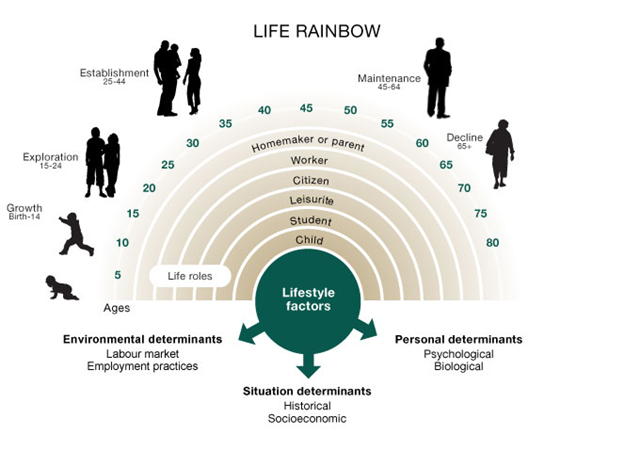
Super’s Life-Career Rainbow, also known as ‘maxicycle’.
Work is Pervasive: As Richardson (1996) pointed out, the “pervasive nature of work in each person’s life needs to be researched.” This shows that work is not only an activity but a crucial part of your life. It affects your lifestyle, relationships, and overall well-being. So, careful planning during your educational years is essential for a fulfilling life.
Academic Majors Pave the Way for Careers: The holistic approach helps you find the right fit for your academic major and career path. This typically begins with psychometric assessments, such as the Strong Interest Inventory, Myers-Briggs Type Indicator, or CliftonStrengths, followed by activities designed to match your interests and strengths with suitable academic and career paths. Your choice of major is not just a subject; it is a key step toward your professional goals.
Why Youngsters Should Embrace a Holistic Approach
A holistic student success strategy is a student-centred method that supports your overall development, social integration, and success. It goes beyond traditional academic advising or career counselling by combining academic, career, and personal counselling into one support system.
For you, as a young person navigating this exciting and sometimes challenging journey, embracing this approach means:
Personalized Support for Every Aspect of Life: You receive inspiration, motivation, and guidance to reach your full potential. This includes proactive support to identify and assist students at risk or in crisis with appropriate resources.
Guidance Beyond the Classroom: Institutions that employ this strategy will provide you with practical career planning support, monitor your academic progress, and offer advice when needed. This ensures a smooth transition to your chosen career field.
Focus on Well-being: A holistic approach also supports student health, wellness, and inclusivity. This means your physical and mental well-being are just as important as your academic performance.
Informed Decision-Making: By integrating various theories and models, including those from Ann Roe, Mark Savickas, and John Holland, along with biopsychological models and personality dimensions, the strategy aims to provide a solid framework for understanding oneself and one’s options.
Make It Your Reality
Don’t wait until graduation to think about your career. Begin by considering how your academic choices, personal interests, and evolving self-image can contribute to a fulfilling professional life. Engage with the resources your institution offers. A good starting point is a psychometric assessment, which can provide deeper insights into your interests and strengths. This can then guide your academic major choices and future work areas.
By adopting a holistic approach, you are not just planning a career; you are designing a life that genuinely reflects who you are and who you want to be.
- Reference:
- Shell, G. R. (2013). Springboard: Launching your personal search for success. Portfolio/Penguin.
- Swanson, J. L., & Fouad, N. A. (2015). Career Theory & Practice: Learning through career studies. Sage
- Zunker, V. G. (2002). Career Counselling: A holistic approach. Brooks/Cole
- Zunker, V. G. (2002). Career Counseling: Applied Concepts of life planning. Brooks/Cole
(The author is a Professor of Career Development based in Toronto, Canada. The article is an updated version of a previous blog.)