

Md Asiuzzaman
Canada is recognized globally as one of the world’s most ethnically diverse and multicultural nations. For newcomers, international students, and anyone curious about what makes Canada unique, understanding the country’s approach to multiculturalism is essential. This guide explores the foundations, principles, and ongoing evolution of the Canadian multicultural project.
What Makes Canada a Multicultural State?
In 1988, Canada made history by passing the Multiculturalism Act, becoming a constitutional multicultural state. This legislation established two fundamental principles that define Canadian identity:
- Cultural preservation and equality: All people have the right to maintain their culture, identity, and language
- Equitable participation: Everyone has the right to full and equitable participation in Canadian society
These principles form the bedrock of Canadian law and national identity, ensuring that diversity is not merely tolerated but actively protected and celebrated.
The Canadian Multicultural Project: An Ongoing Journey
Canadian multiculturalism is best understood as an evolving “project” rather than a finished achievement. It represents the ongoing effort to bring diverse peoples together while creating a shared national identity and a stable society. This project addresses complex questions that continue to shape Canadian society:
- How do we form a cohesive society with people from vastly different backgrounds?
- Do we simply tolerate differences, accept them, or celebrate them?
- What role do Indigenous Peoples play in defining Canada’s identity?
- How do we acknowledge and address the predominantly European colonial foundations of Canadian institutions?
Canada’s Bilingual Foundation
Canada’s status as a bilingual nation stems from its colonial history. The British and French colonized Canada and established the parliamentary democracy that functions today. The Canadian Constitution Act of 1867 and the Official Languages Act of 1969 enshrine English and French as official languages.
In practice, this means:
- All federal government services are available in both English and French
- Court systems operate in both languages
- Canadian laws are written in both English and French
- Provincial education systems include French language instruction
Indigenous Peoples: Canada’s First Inhabitants
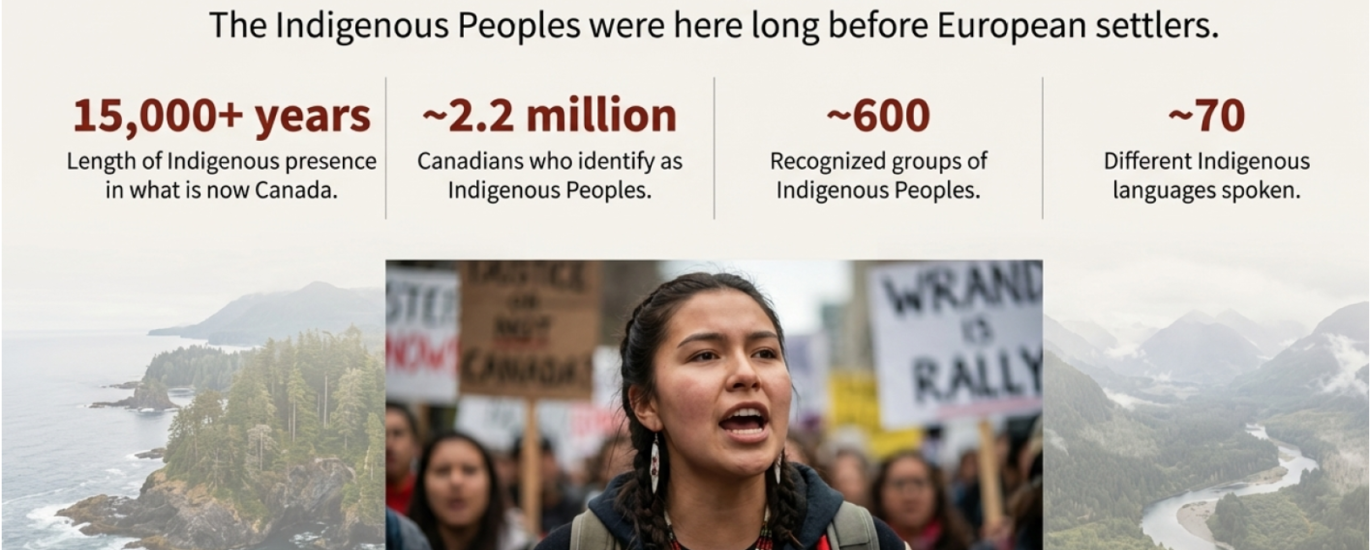
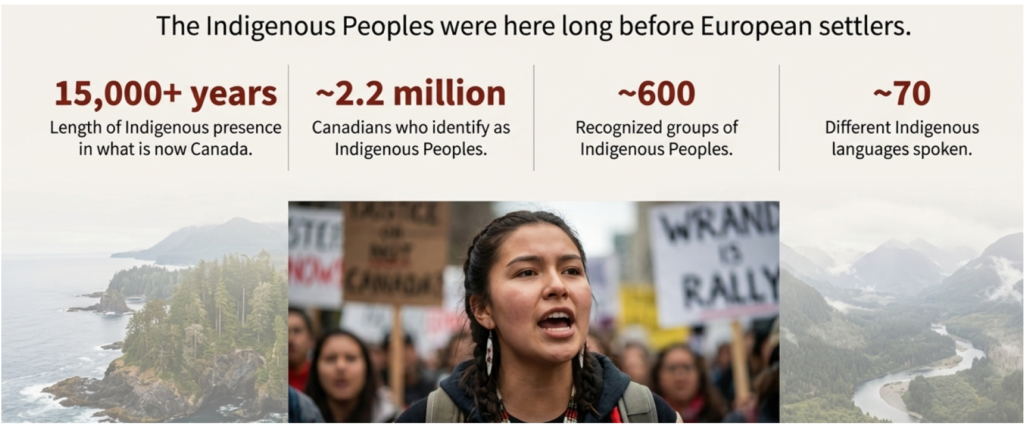
Before discussing modern Canadian diversity, it is crucial to acknowledge that Indigenous Peoples inhabited this land for at least 15,000 years before European colonization. Today, approximately 2.2 million Canadians identify as Indigenous Peoples, representing about 6.1 percent of the total population.
Understanding Indigenous Terminology
The term “Indigenous People” describes the distinct societies of First Nations, Inuit, and Métis peoples in Canada. There are approximately 600 recognized Indigenous groups, each with distinct customs, beliefs, and languages—about 70 in total.
Important note: The term “First Nations” refers specifically to Indigenous Peoples within Canada who do not identify as Métis or Inuit. The term “Indian” should be used only to refer to legal status under the Indian Act, a controversial piece of legislation first passed in 1876 that remains in force with amendments.
Canada’s Demographic Diversity: A Statistical Overview
Recent census data (2016-2021) reveals the extent of Canada’s multicultural composition:
Ethnic Origins
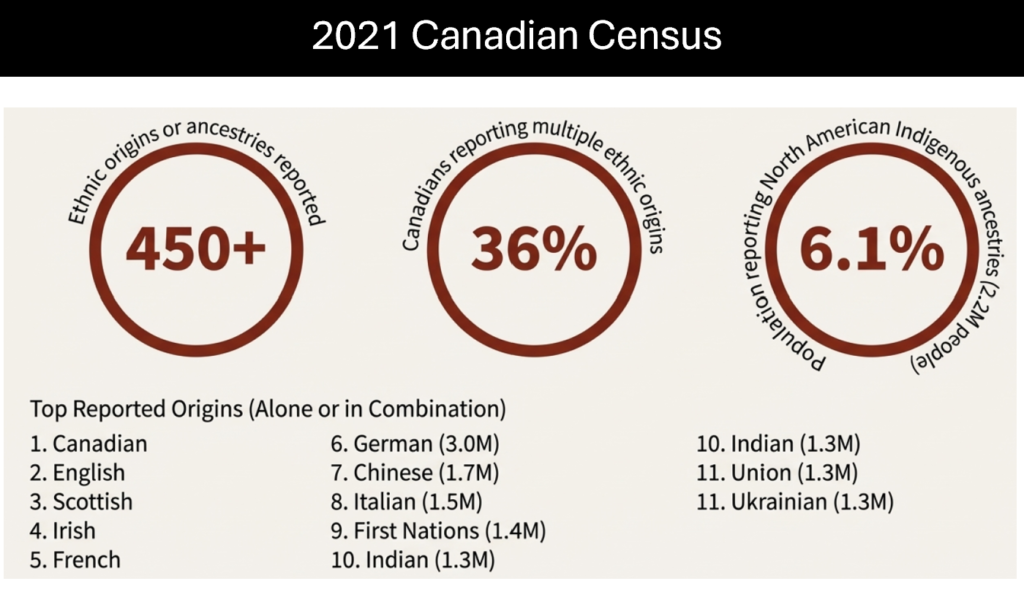
- Over 450 different ethnic origins or ancestries are reported by Canadians
- Approximately 60 percent of Canadians report a single ethnic origin
- 36 percent report multiple ethnic origins
- The largest single origin is “Canadian” (18 percent), with an additional 12 percent reporting Canadian in combination with other origins
- Major ethnic groups include German (3.0 million), Chinese (1.7 million), Italian (1.5 million), First Nations (1.4 million), Indian (1.3 million), and Ukrainian (1.3 million)
Immigration Patterns
Canada’s diversity continues to grow through immigration:
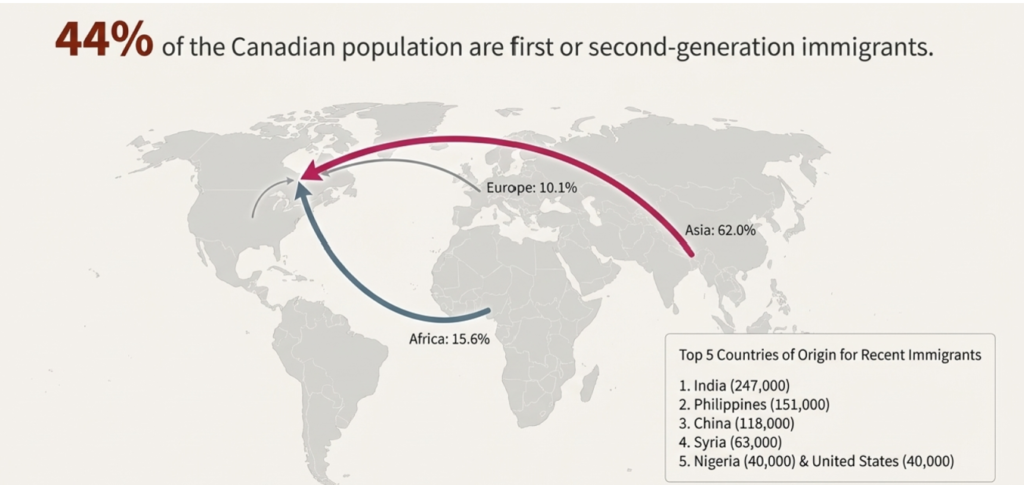
- 44 percent of the Canadian population is first or second-generation immigrants
- Asia accounts for 62 percent of recent immigrants (2016-2021)
- Africa represents 15.6 percent of recent immigrants
- Europe accounts for 10.1 percent
- Top source countries include India (247,000), the Philippines (151,000), China (118,000), Syria (63,000), and Nigeria (40,000)
Racialized Population Growth
The concept of a racialized population refers to persons belonging to a visible minority group:
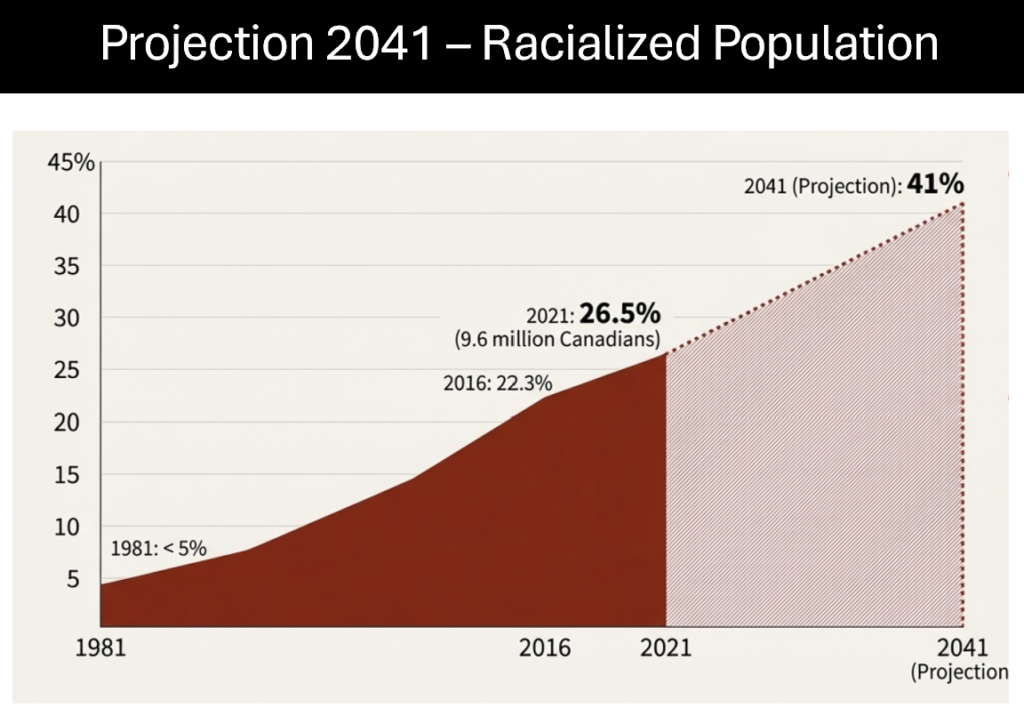
- 26.5 percent of Canadians (9.6 million) identify as members of racialized groups
- This represents an increase from 22.3 percent in 2016 and less than 5 percent in 1981
- Projections suggest the racialized population may account for 41 percent of Canada’s population by 2041
- The largest racialized groups are South Asian (2.6 million), Chinese (1.7 million), and Black (1.5 million)
Religious Diversity
Canada’s religious landscape is rapidly evolving:
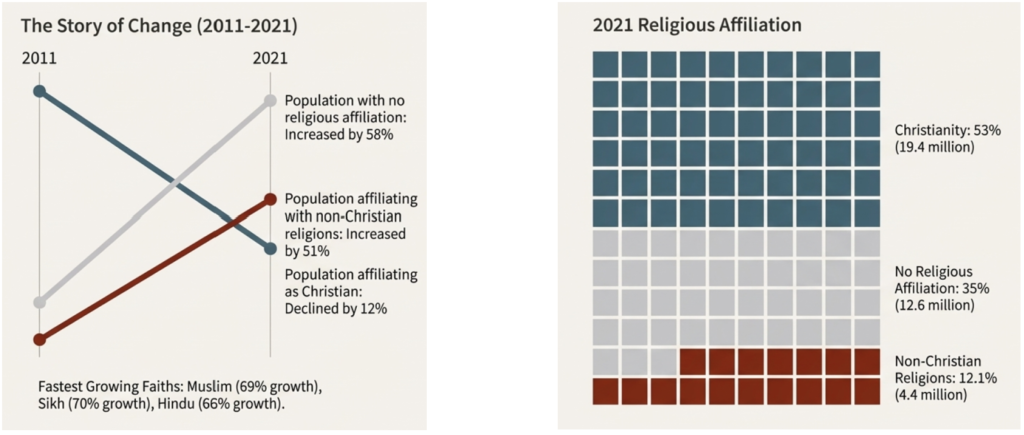
- 53 percent of Canadians affiliate with a Christian religion (down 12 percent from 2011)
- 12.1 percent affiliate with a non-Christian religion (up 51 percent from 2011)
- 35 percent indicate no religious affiliation (up 58 percent from 2011)
- The fastest growing groups include Sikh (70 percent growth), Muslim (69 percent growth), and Hindu (66 percent growth)
Is Canadian Multiculturalism Working?
Social scientists Fleras and Elliott describe Canadian multiculturalism as “a formal doctrine and a system of practices.” They characterize Canada as “an ethnically diverse and remarkably cohesive society” that is “widely admired” for its approach to diversity, particularly compared to global norms.
The Success Story
Survey data consistently show strong political and public support for diversity principles. Canada’s reputation as a pioneer in building bridges across cultural divides has attracted international attention from governments struggling with minority dynamics and ethnic nationalisms.
The Ongoing Challenges
However, Fleras and Elliott also acknowledge significant challenges. They note that “not all is well in ‘multiculture-land,'” citing a crisis of confidence and a changing global political landscape. The emergence of nationalist sentiments worldwide is eroding the certainties that once made multiculturalism central to Canadian identity building.
What This Means for Newcomers and International Students
Understanding Canada’s multicultural framework is essential for those arriving in the country:
- Your culture matters: Canadian law protects your right to maintain your cultural identity, language, and practices
- Equal participation is guaranteed: You have the legal right to participate fully in Canadian society
- Diversity is the norm: Canada’s population is extraordinarily diverse, and this diversity continues to increase
- Ongoing evolution: Canadian multiculturalism is not a finished project but an ongoing conversation about how to build an inclusive society
The above discussion raises three important questions or discussion points:
- The gap between 1867 (Constitution Act) and 1988 (official multiculturalism) – why 121 years?
- Why is the Indian Act from 1876 still in force today?
- What do the projected 2041 statistics mean for Canada’s future identity?
Conclusion
Canada’s multicultural project represents an ambitious and ongoing effort to create a cohesive society from incredible diversity. While challenges remain, the country’s legal framework, demographic reality, and public commitment to diversity principles create a unique environment for newcomers and international students. Understanding this context helps newcomers appreciate both the opportunities and responsibilities that come with being part of the Canadian multicultural project.
References
- Environics Analytics. (2022, October 26). Census 2021: Canada’s cultural diversity continues to increase. https://environicsanalytics.com/en-ca/resources/blogs/ea-blog/2022/10/26/census-2021-canadas-cultural-diversity-continues-to-increase
- Fleras, A., & Elliott, J. L. (2002). Engaging diversity: Multiculturalism in Canada (2nd ed.). Nelson Thompson Learning.
- Heritage Community Foundation. (2010). Understanding Canadian diversity edukit: Canada’s multicultural parties. http://wayback.archive-it.org/2217/20101208162004/http:/www.edukits.ca/multiculturalism/student/diversity_multiculturalism_e.html
- Md Asiuzzaman. (2026). Key dates and events in Canadian multiculturalism: A student study guide. Adapted from LIBS1580 course materials.
- Wikipedia contributors. (2019, November 17). Canada. In Wikipedia, The Free Encyclopedia. https://en.wikipedia.org/w/index.php?title=Canada&oldid=926572729
- Younging, G. (2018). Elements of Indigenous style: A guide for writing by and about Indigenous peoples. Brush Education Inc.