


Md Asiuzzaman
Having earned my Strong Interest Inventory certification in 2019, I felt it was time to update my knowledge of the SII assessment process. With continued access to the GS Consultants program site and my CareerID through Psychometrics Canada, I’ve refreshed my expertise and decided to share these insights through a series of blog posts over the coming weeks. To streamline the analysis, organization and writing process, I’ve leveraged AI as a productivity tool. This is the second part of the series.
Choosing the right career path can feel overwhelming. Where do you start when thousands of occupations exist? Holland’s RIASEC theory offers a proven framework that has guided career decisions for decades.
What Is Holland’s RIASEC Theory?
John Holland’s theory categorizes both people and work environments into six personality types. These types form the foundation of the Strong Interest Inventory, one of the most widely used career assessment tools.
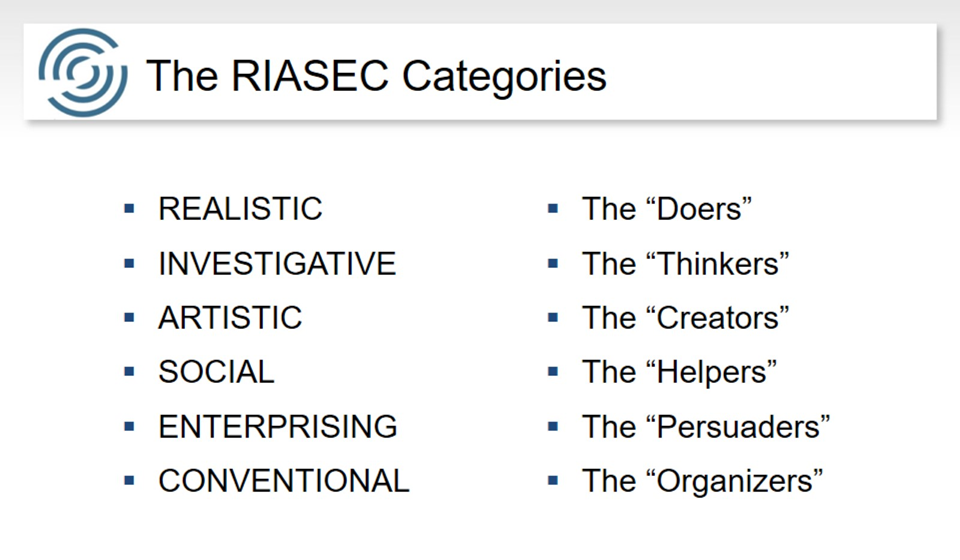
The six types spell out RIASEC:
- Realistic
- Investigative
- Artistic
- Social
- Enterprising
- Conventional
The Evolution of the Strong Interest Inventory
The Strong has an impressive history of helping people find satisfying careers.
Key Milestones:
- 1927 – First Strong Vocational Interest Blank published with 10 occupational scales
- 1933 – Women’s form introduced
- 1960 – Basic Interest Scales added
- 1974 – Men’s and women’s forms merged; Holland codes integrated
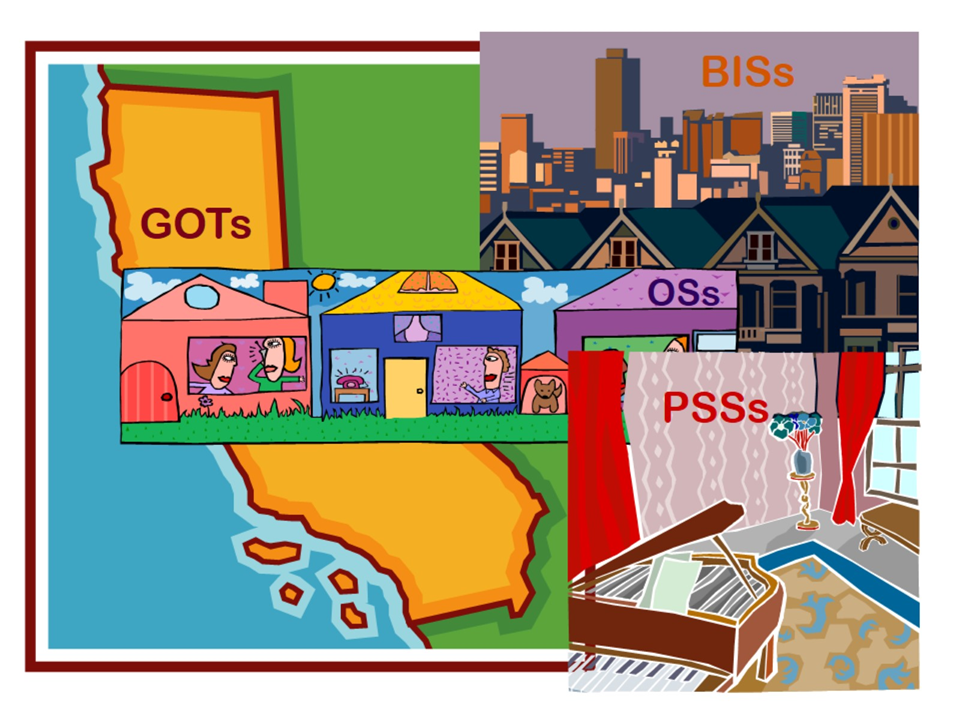
- 1994 – Personal Style Scales added
- 2012 – Occupational Scales revised
- 2023 – Strong244 released
Interestingly, the Strong came first. Holland’s theory was added in 1974 to provide organizational structure to the existing scales.
The Six RIASEC Types Explained
R = Realistic (The Doers)
Realistic types work best with tangible objects and physical tasks. They prefer hands-on work with machines, tools, plants, or animals.
Strengths include:
- Mechanical skills and physical coordination
- Fixing and repairing equipment
- Handling emergencies effectively
- Working outdoors
Ideal environments: Organized settings with clear authority lines, manufacturing facilities, industrial workplaces.
I = Investigative (The Thinkers)
Investigative types thrive on analyzing information and solving complex problems. They value independence and intellectual challenges.
Strengths include:
- Scientific research and investigation
- Technical writing
- Complex problem-solving
- Analytical thinking
Ideal environments: Unstructured research settings, laboratories, academic institutions
A = Artistic (The Creators)
Artistic types use imagination and creativity to produce original work. They value beauty, aesthetics, and self-expression.
Strengths include:
- Music and drama performance
- Creative writing
- Visual arts
- Innovative thinking
Ideal environments: Flexible settings that encourage self-expression and non-conformity

S = Social (The Helpers)
Social types focus on helping, teaching, and empowering others. They value relationships and teamwork above all.
Strengths include:
- Verbal communication
- Teaching and training
- Understanding others’ needs
- Collaborative problem-solving
Ideal environments: Friendly, supportive teams focused on helping others
E = Enterprising (The Persuaders)
Enterprising types lead others toward organizational goals. They value status, ambition, and tangible success.
Strengths include:
- Public speaking and persuasion
- Sales and negotiation
- Project management
- Strategic thinking
Ideal environments: Fast-paced, competitive business settings
C = Conventional (The Organizers)
Conventional types excel at organizing information and managing systems. They value accuracy, efficiency, and stability.
Strengths include:
- Data management
- Financial record-keeping
- Resource allocation
- Detail-oriented work
Ideal environments: Structured organizations with clear procedures and hierarchies
How the Hexagon Works
Holland arranged these six types in a hexagonal model. This shape reveals essential relationships:
Adjacent types share common qualities. A Social-Enterprising (SE) person enjoys helping people and leading them toward goals.
Opposite types have little in common. Realistic and Social types typically prefer very different work activities.
Decades of research confirm the hexagon’s accuracy in predicting career satisfaction.
When Interests Stabilize
As children grow, they naturally gravitate toward enjoyable activities. They develop skills in these areas while avoiding activities they dislike.
Most vocational psychologists agree that interests stabilize around age 25. However, patterns emerge much earlier.
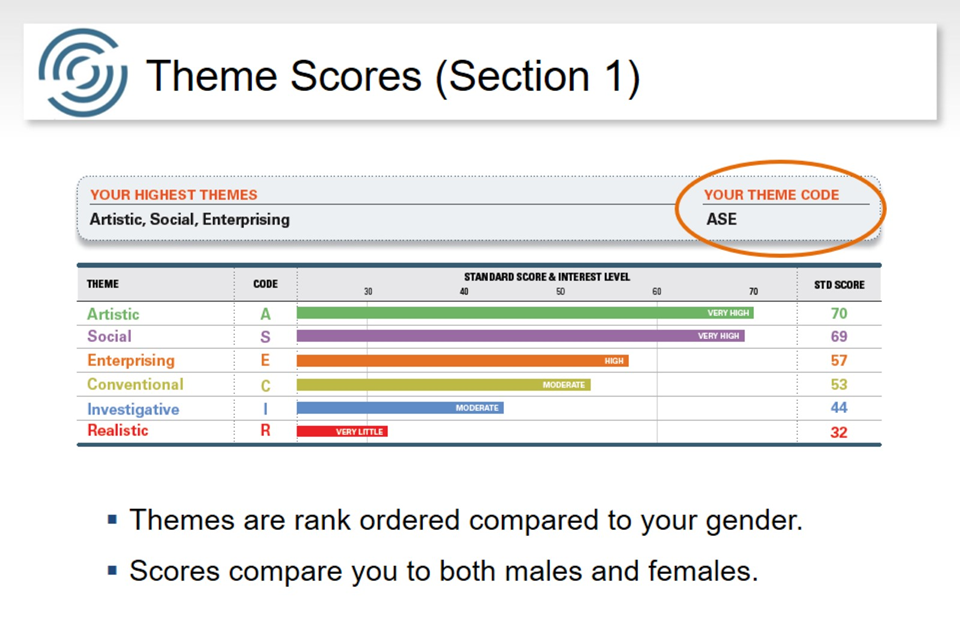
The Strong Interest Inventory identifies these patterns to suggest:
- Potentially satisfying career fields
- Compatible work environments
- Suitable hobbies and interests
- Matching corporate cultures
Understanding Multiple RIASEC Codes
Most people don’t fit just one category. They typically identify with two or three letters.
Examples of combined codes:
- AI person – Uses imagination to analyze information and ideas
- AS a person – Uses creativity to help others
- AIS person – Combines creativity with analytical thinking to benefit people
Assessing Career Readiness
The Strong works best for people who have developed interest patterns. It organizes existing interests rather than creating new ones.
The Occupational Daydreams Exercise
Holland’s Self-Directed Search asks people to list all career aspirations from childhood to present. Each daydream receives a RIASEC code.
When consistent codes emerge over time, the person is ready for serious career exploration.
Real Example: A college sophomore’s career dreams from age 4 to 19 included: mommy (S), singer (A), dancer (A), famous scientist (I), nurse (S), teacher (S), writer (A), therapist (S), and music therapist (SA).
Her Strong profile? SA (Social-Artistic). Her interests stabilized when she volunteered at a hospital in high school.
Practical Applications for Career Professionals
Career counsellors can gather similar information during intake by asking clients about all careers that have interested them. This conversation:
- Builds rapport quickly
- Reveals RIASEC patterns before formal assessment
- Helps determine if assessment is appropriate
For clients with work history, examine their job titles and educational experiences. These often reveal RIASEC development patterns.
The Bottom Line
Holland’s RIASEC theory makes career exploration manageable. By understanding your personality type and matching it with compatible environments, you increase your chances of long-term career satisfaction.
The Strong Interest Inventory uses this proven framework to help millions of people find their calling. Whether you’re a career counsellor or a job seeker, understanding RIASEC codes opens the door to more fulfilling work.
Reference:
Md Asiuzzaman. (2026). Holland’s RIASEC Model and the Strong Interest Inventory [Training module 2: John Holland’s RIASEC Theory of Personality Types & Work Environments]. Retrieved from https://gsconsultants.training/lessons/completed-module-2-john-hollands-riasec-theory-of-personality-types-work-environments/Code.docx