

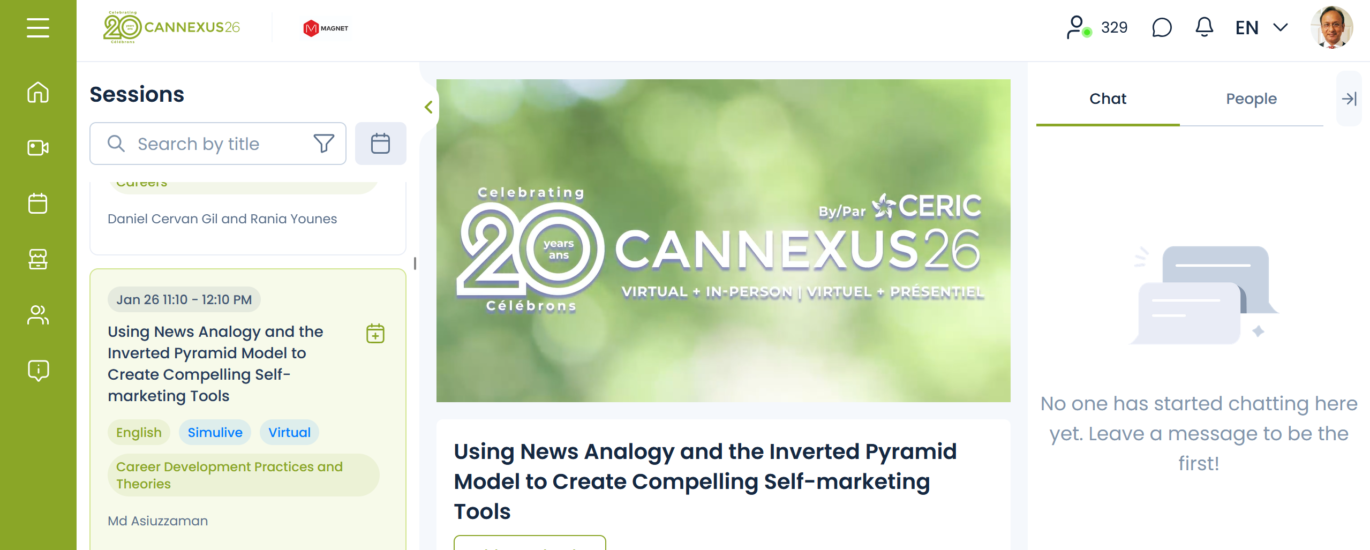
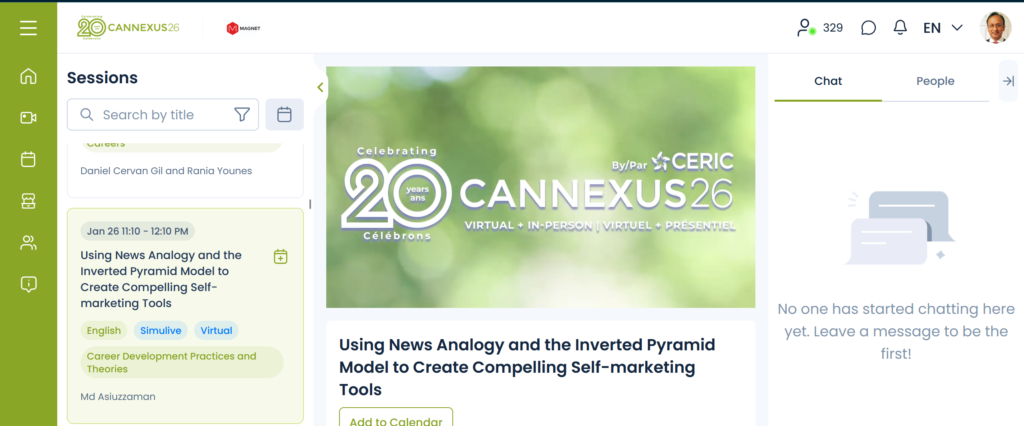
Insights from my Cannexus26 Presentation (Simulive), January 26, 2026, Ottawa, Canada
Md Asiuzzaman
“There is no story in the world which can’t be told in 25 words.”
This is what journalism schools teach students about writing a news intro. Recently, I had the privilege of presenting this concept at Cannexus26, Canada’s premier career development conference, where I shared how this powerful journalistic principle can revolutionize how job seekers approach their resumes and personal branding.
In career development practice, we often talk about ‘storytelling’. However, when we ask a job seeker to tell their story in 25 words, they often fail. Instead of a compelling narrative, they offer a dull, generic professional introduction or elevator pitch. If I ask them to introduce themselves in seven words as a news headline, they typically use adjectives such as hardworking, creative, and detail-oriented. Within those seven words, you cannot detect or identify what profession they belong to or why a recruiter should care.
In today’s competitive job market, you have just six seconds to capture a hiring manager’s attention with your resume. That’s barely enough time to read a headline. So how do you make those precious seconds count? The answer lies in an unexpected place: journalism.
At Cannexus26, I presented an innovative approach that applies news writing principles to career development—specifically, using the inverted pyramid model to craft compelling self-marketing tools. This technique helps job seekers, particularly international students and career transitioners, present themselves professionally while highlighting their signature skills, relevant experience, and core values in a way that immediately captures attention.
Alarmingly Low Resume Conversion
A resume is the most common marketing tool job seekers use in their job hunt, as more than 80% of jobs you can apply for require a resume. Others ask for both a resume and a cover letter. There are about a dozen sectors that require a portfolio.
As I shared with attendees at Cannexus26, the most common complaint I receive from students and job seekers is that they are not getting interview calls. They send out dozens, sometimes hundreds of resumes, yet their phones remain silent. The answer is often simple: they are not customizing their resumes effectively, and more critically, they are not organizing their information in a way that captures recruiters’ attention in those crucial first moments.
The evidence is stark. Research shows that recruiters spend just six seconds deciding whether to keep a resume for the next stage or trash it (Wolf, 2020). Six seconds. You can’t even read anything substantial in that time; you can only assess whether the structure and key information immediately grab your attention.
According to the Huntr Research Q2 2025 Job Search Trends Report, which analyzed 461,000 applications, 285,000 job ads, and 59,000 resumes, customized resumes achieve a 5.75% conversion rate compared to just 2.68% for generic resumes. That’s a 115% improvement in success rates. Yet many candidates continue to send the same resume to different positions, hoping something will stick (Huntr, 2025).
The News Analogy
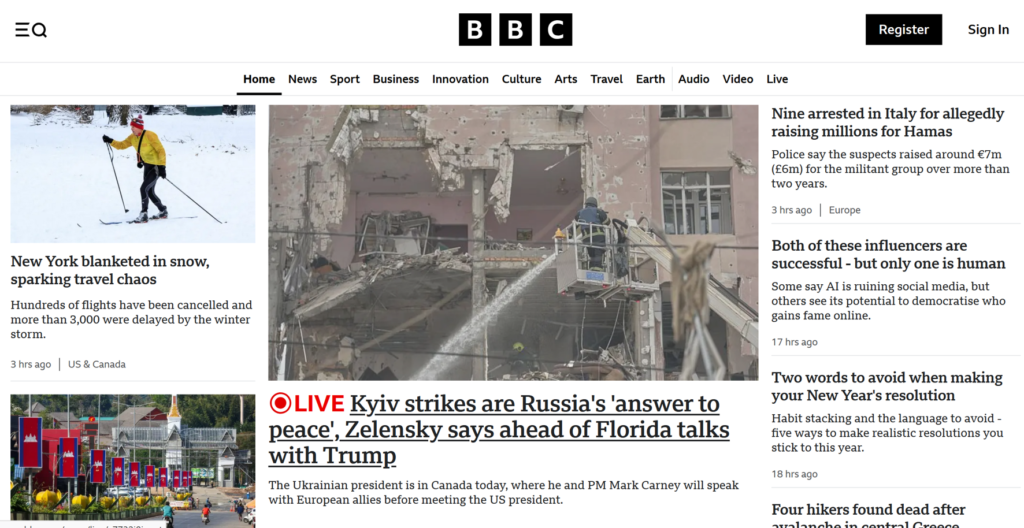
Journalism was my first career, followed by teaching journalism at universities. In Canada, I spent years learning and earning certification to become a career development professional, and I found that my decades of skills in journalism are transferable. I’ve discovered that the principles that make news compelling can transform how job seekers present themselves. This is a perfect example of transferable skills in action, leveraging expertise from one career to solve problems in another.
In journalism, we follow a fundamental principle: attract the readers with a sharp headline, then provide the most important information first (the intro). The rest of the information will follow in a logical chronological order. This is embodied in the inverted pyramid model, where the widest part at the top contains the most crucial details, and information becomes progressively less crucial as you move down. The same principle should guide resume writing.
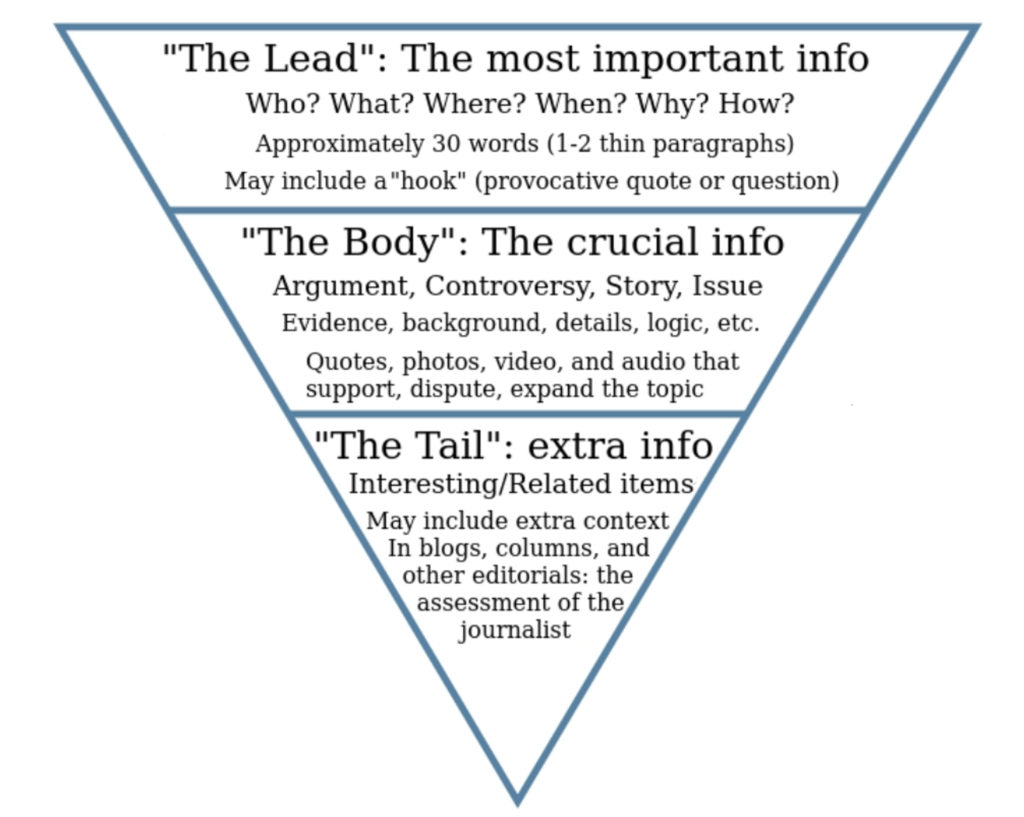
Understanding the Inverted Pyramid Model
Think about how you read news online. You see a headline (5-7 words) and a stand-first paragraph. These elements are designed to accomplish one thing: attract readers to click and read the full story. Your resume needs to work the same way.
A reporter covering a major accident doesn’t bury the death toll in paragraph five. They lead with it: Ten people killed in highway collision. The intro is, as we say in newsrooms, half the story. It contains enough information that even if you read nothing else, you understand what happened.
Similarly, reporters gather far more information than they use. They contain information on witnesses, weather conditions, road specifications, and other relevant details. But they prioritize ruthlessly, asking constantly: What does the reader need to know first? What will draw them into this story?
Job seekers need to adopt this same mindset. You have years of experience, multiple skills, and various accomplishments. The question isn’t whether all of it is valuable. The question is: What does the recruiter need to know first? What will make them want to know more about you or interview you?
Practical Application: Transform Your Resume
During my Cannexus26 presentation, I walked attendees through a real example. Consider a typical resume with just contact information at the top, followed by a paragraph of career objectives or a bulleted professional summary. There is nothing that immediately signals to a recruiter why this candidate deserves their attention.
Now, imagine the same resume with one critical addition: a headline. Just below the name: Customer Service Representative, followed by Position Applying For: Customer Service Manager, and bringing 20 years of customer service and sales experience.
In six seconds, a recruiter now knows:
– This is a customer service professional with 20 years of experience
– She is applying for the Customer Service Manager position
– They have the depth of experience that suggests the candidate is ready for a management role.
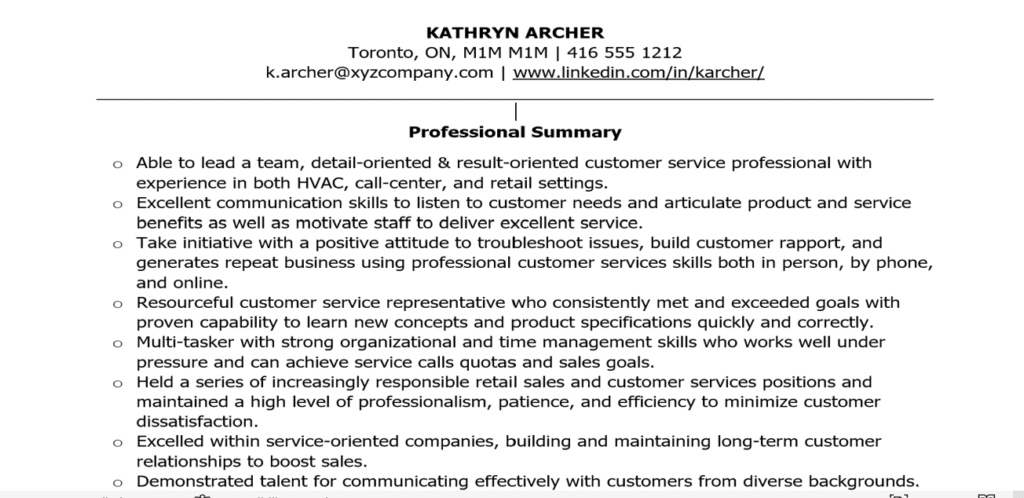
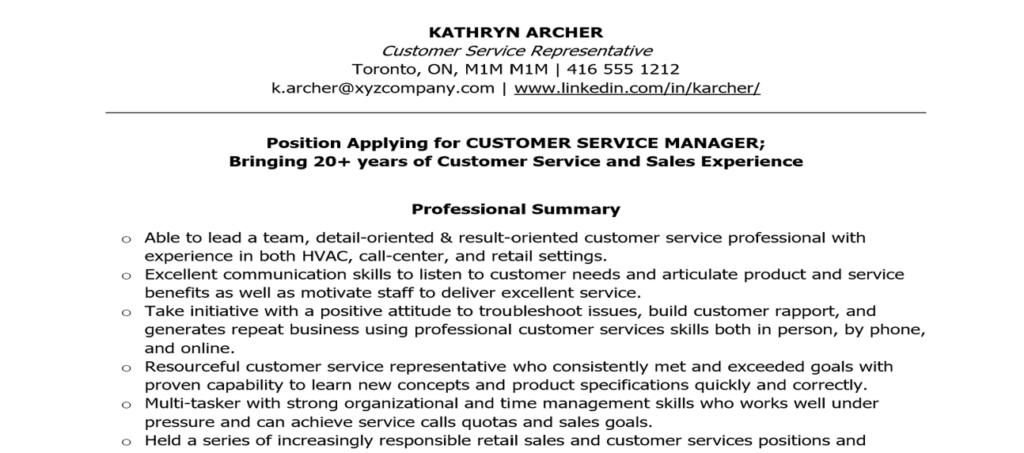
Compare the two resume sections above and see how a small change makes an enormous impact. It’s the difference between being immediately categorized as a potential fit or being passed over. From the second screenshot, a recruiter can immediately relate to the candidate, concluding that an applicant with 20 years of customer service experience is a strong fit for the customer service manager role.
Questions Every Job Seeker Must Answer
At Cannexus26, I challenged job seekers to answer these fundamental questions:
- Can you introduce yourself in 6-7 words? Not with adjectives, but with meaningful information about your professional identity?
- Can you introduce yourself in a news intro way? One sentence, 25-30 words, that captures who you are and what you offer?
- Which five skills should you be known for? Not all your skills, but the five most relevant to the job you’re seeking?
- What makes you unique for this specific job? What soft skills or experiences set you apart?
- With your resume, can you claim that you are the best candidate for this job? If not, what needs to change?
The Method: Think Like a Reporter
Here’s how to apply this approach:
- Create a headline. Below your name, state your professional identity clearly, such as Senior Marketing Analyst or Certified Project Manager, rather than “motivated professional seeking opportunity.”
- Under the contact information or header, write ‘standfast’ or a meta description to attract recruiters to the professional summary.
- Write a news-intro style professional summary in bullet points. Not a paragraph of career objectives, but 5-7 bullet points that capture your most important professional attributes. Think: If a recruiter only read this section, would they understand why you’re qualified?
- Arrange information by employability value. Use what I call logically chronological order. Yes, your work history should be reverse-chronological, but within each role, lead with accomplishments and responsibilities that directly align with the job description.
Customize ruthlessly. Just as a reporter wouldn’t use the same ‘lede’ for different audiences, you shouldn’t use the same resume for different positions. Study the job description, identify the keywords and priorities, and ensure your resume headline and summary reflect them.
What AI Can’t Do
Many job seekers are now turning to AI tools to help with their resumes, and these tools can be useful assistants. Reports indicate that LinkedIn processes 11,000 job applications per minute (FE News Desk, 2025). Most of this uncustomized resume will end up in the recycling bin. I emphasized in my presentation that AI can process information and generate a resume tailored to the job, but you will be missing out because AI cannot perform critical thinking independently.
AI might suggest keywords or restructure sentences, but only you can determine which of your experiences truly matter for a specific role. Only you can prioritize your skills according to their strategic importance. Only you can craft a compelling headline that captures who you are in the context of the job you are pursuing. The thinking part of the reporter’s judgment about what goes in the ‘lede’ is uniquely human.
Real Results
I’ve been teaching this method in my career development courses at Conestoga College, and the results speak for themselves. Students who apply these principles consistently see improved response rates. One student told me he received three interview calls from three applications; a 100% conversion rate, which is a bit unusual.
However, the goal is to achieve at least a 30% conversion rate, rather than 2.68% or 5.75%. One interview per three applications would give candidates greater confidence. With the inverted pyramid approach, this becomes achievable because you are no longer relying on recruiters to dig through your resume to find your value. You are presenting it to them immediately, in those critical first six seconds.
The Bottom Line
Your resume is not a comprehensive autobiography. It’s a marketing tool. Like a news article, it needs to capture attention immediately with the most compelling information, then provide supporting details for those who want to know more.
Before you submit your next application, ask yourself the two fundamental questions that drive all good journalism:
1. Will this draw the hiring manager’s attention in those crucial six seconds?
2. Is this resume good enough for me to claim I am the best candidate for this position?
If you can answer yes to both questions, you’re thinking like a reporter. You’ve mastered the inverted pyramid. And you’re ready to transform your job search.
References
- Asiuzzaman, M. (2026, January 26). Using news analogy and the inverted pyramid model to create compelling self-marketing tools [Conference presentation]. Cannexus26, Ottawa, ON, Canada.
- FE News Desk. (2025, January 23). LinkedIn processing over 11,000 applications a minute: Surge in bots or job crisis? Internet debates. The Financial Express. https://www.financialexpress.com/jobs-career/linkedin-processing-over-11000-applications-a-minute-surge-in-bots-or-job-crisis-internet-debates-3922818/
- Huntr. (2025). Q2 2025 Job Search Trends Report. https://huntr.co/research/job-search-trends-q2-2025
- Wolf, K. D. (2020, June 19). Play the one-minute game that’ll show you how to improve your resume. The Muse. https://www.themuse.com/advice/play-the-oneminute-game-thatll-show-you-how-to-improve-your-resume